


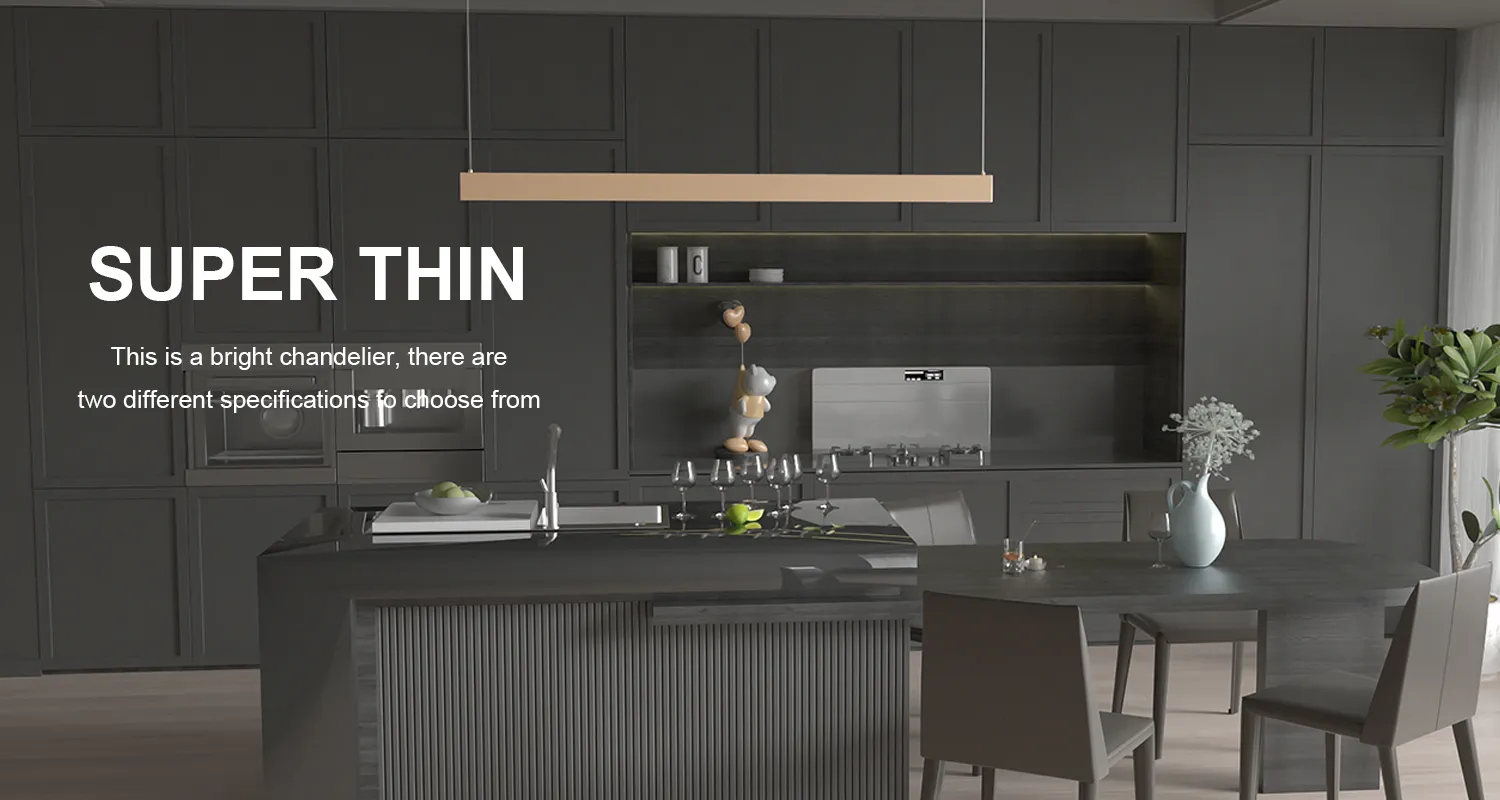
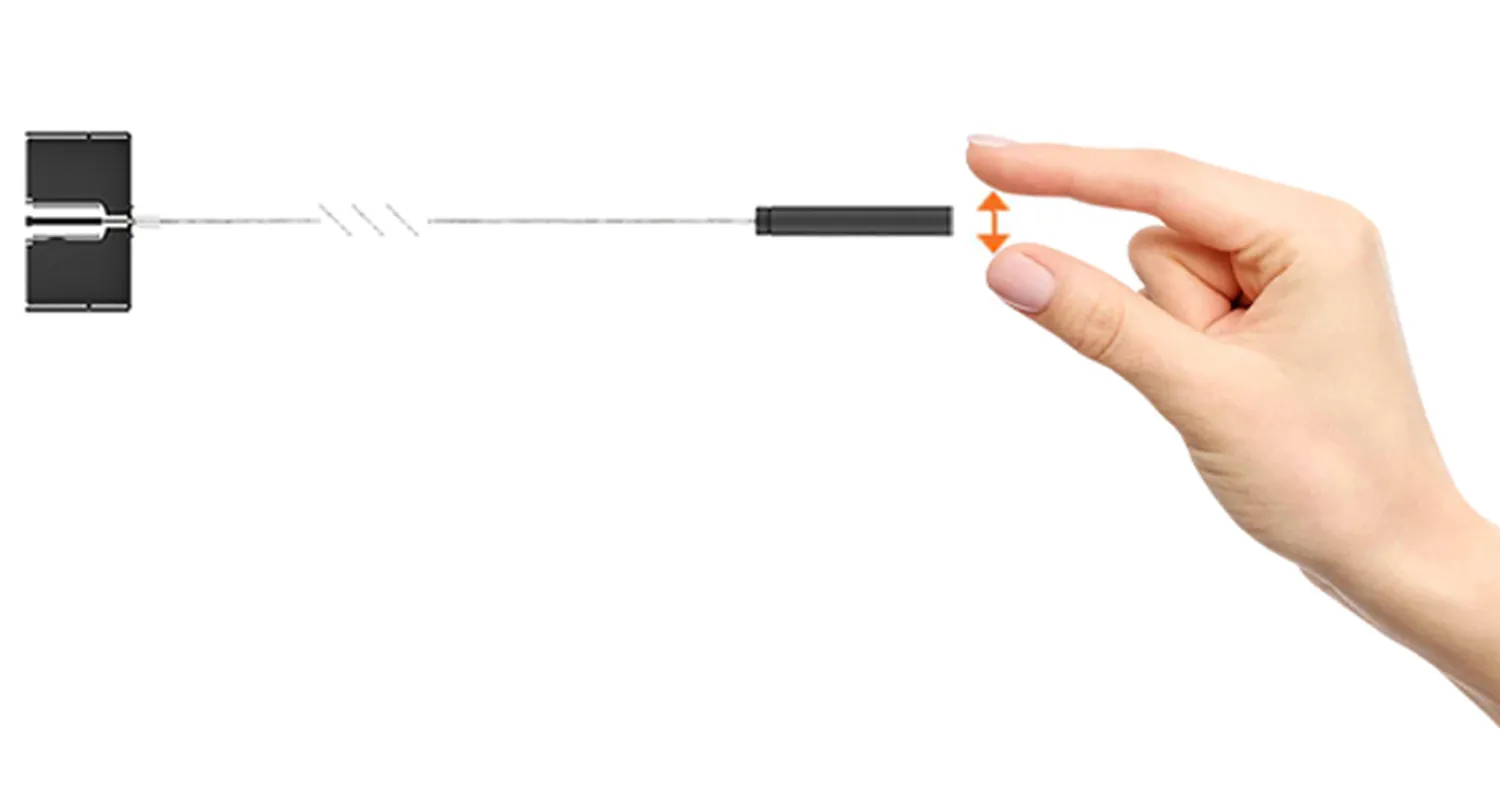
The LE006 is a 36W linear pendant light built around a slim aluminium bar. Two suspension cables drop from a rectangular ceiling canopy and carry the bar at the height you set, so the light sits in the room rather than inside the ceiling. Instead of cutting a row of holes for downlights, you hang one continuous element and let it light the surface below evenly — which is why this fitting suits dining tables, kitchen islands, reception and meeting counters, showroom display runs and desk banks, where a straight unbroken line reads better than a grid of small pools of light.
Huiheng Lighting builds this model as a led linear light manufacturer in Xiaolan Town, Zhongshan, and supplies it to lighting importers and wholesalers, project contractors, interior and lighting designers, private-label brands and multi-store operators. Most buyers take it one of two ways: as a repeat stock line for a market that keeps asking for linear pendants, or as a project item written into an office, hotel or store specification. Because the same bar is offered in three colour temperatures, two light distributions and three finishes, one item number can cover several rooms in the same building.
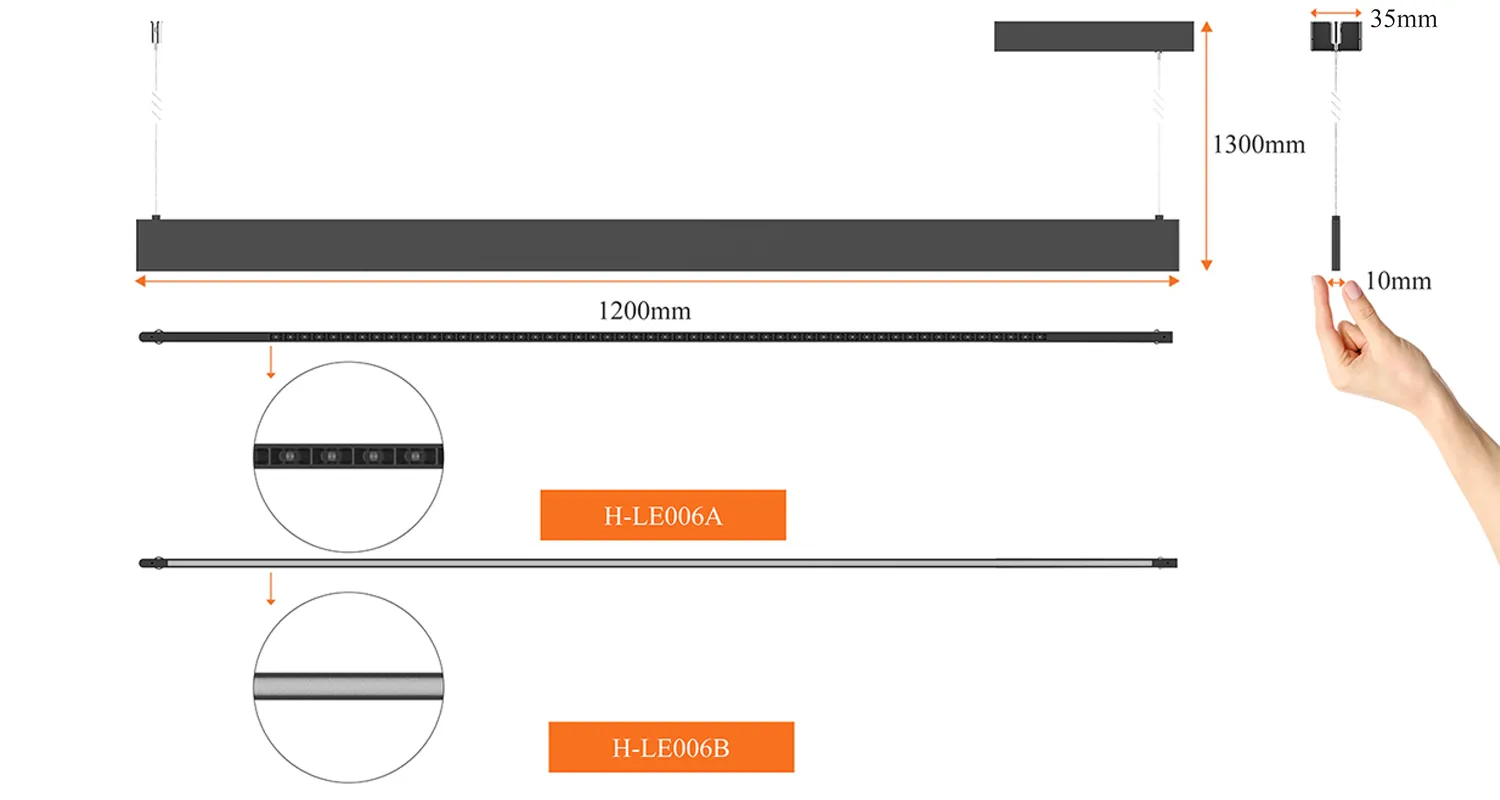
| Item No. | LE006 |
| Power | 36W |
| Luminous Flux | 1100lm / 1200lm / 1300lm / 2400lm / 2500lm / 2600lm |
| CCT | 3000K / 4000K / 5000K |
| CRI | ≥90 |
| Material | Aluminium |
| Finish | Sand white / Sand black / Gold |
| Light Distribution | Grille or floodlight |
| Mounting | Suspended on two cables from a rectangular ceiling canopy |
| Diffuser | Diffused strip along the underside of the bar |
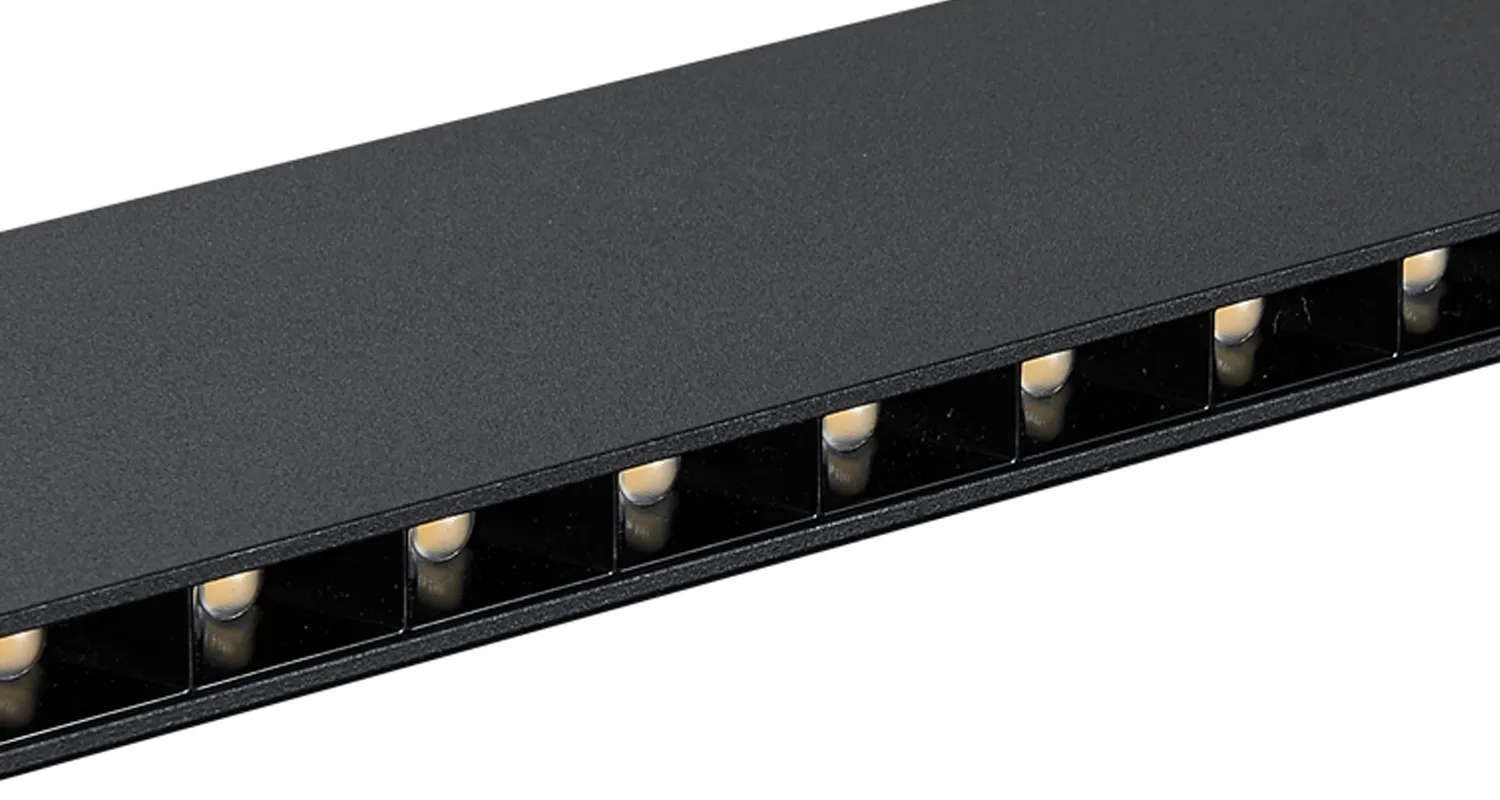
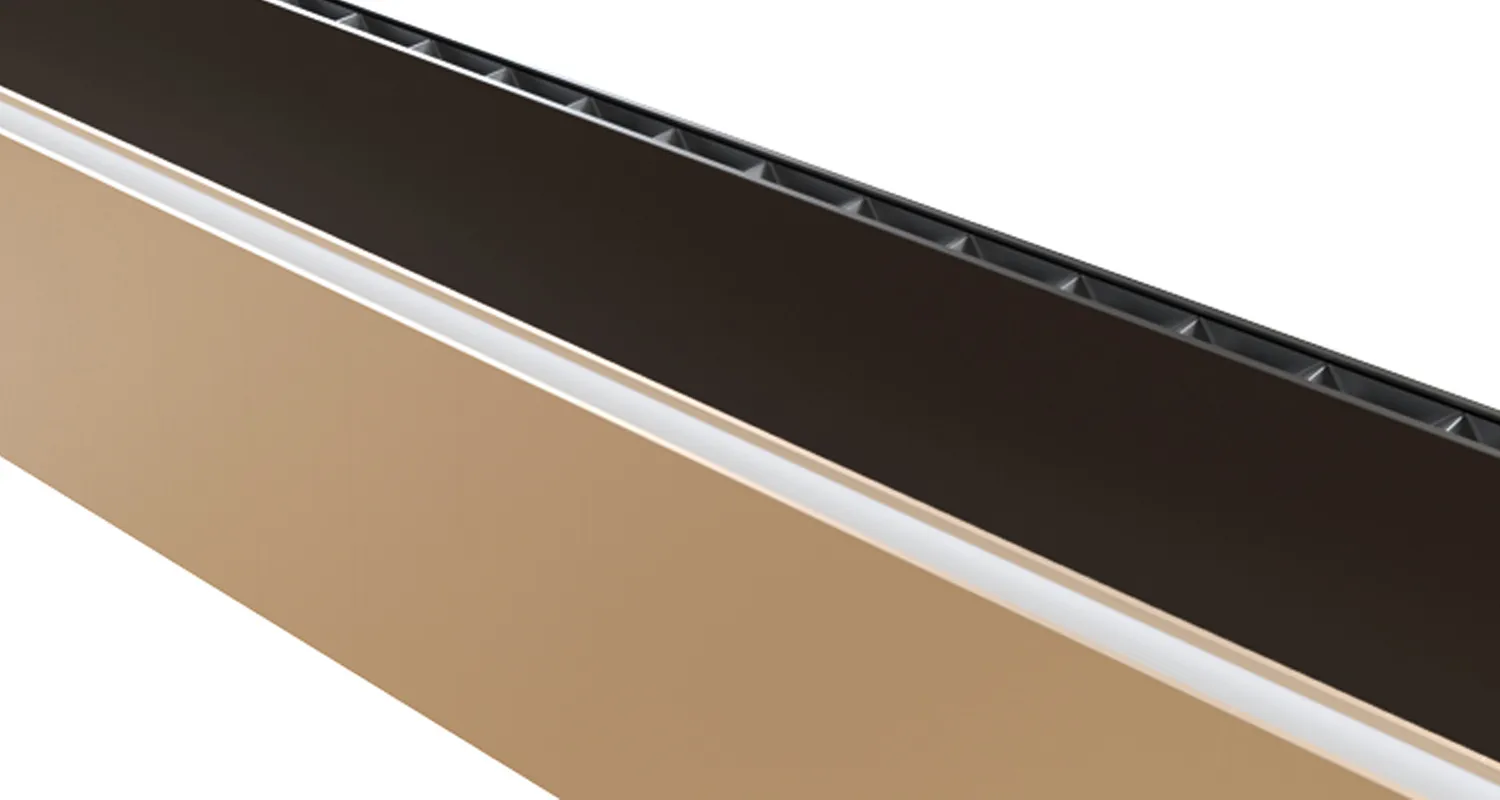
The lamp body is die-cast aluminium, which gives the bar a solid feel in the hand and a rigid housing that does not flex once it is hung. Aluminium also moves heat away from the LED strip along the whole length of the bar, and that is what allows a housing this slim to run at 36W: the metal itself acts as the heat path, so there is no bulky heat sink hidden above the ceiling. The LED strip sits behind a diffuser that runs along the underside, softening the individual diodes into an even line of led linear lighting rather than a row of visible points. Every bar leaves the line in a low-sheen, sand-textured finish rather than a mirror gloss, which keeps reflections off screens and glass display cases.
Before a large order goes ahead, it is worth pinning down the details that move between finishes and between production runs. The aluminium grade, the diffuser material and the exact surface process — spraying, anodising or brushing — differ by finish and by batch, so ask your sales contact to confirm the grade and the treatment for the colour you have specified. If the bar will hang beside other metal fixtures, request a finish sample and check it under your own lighting before the batch is produced. Confirm as well how the diffuser and the end caps are sealed if dust or fine particles are a concern in the space.
Open-plan offices. A run of bars over a desk bank replaces a row of individual downlights, which cuts the number of ceiling penetrations, keeps the ceiling plane clean and spreads light evenly across the working area. Neutral white is the usual choice in this setting.
Showrooms and display floors. Hung above a display run or a counter, the bar lays an even line of light across the full width of the merchandise instead of leaving hot spots, so products read consistently from one end of the display to the other.
Cafés, restaurants and hotel public areas. Warmer output over long tables, bar counters and reception desks gives a room a calmer feel, and because the fitting hangs rather than sits in the ceiling, it can be dropped low over a counter without changing the ceiling itself.
Chain stores and supermarket fit-outs. One model repeated across branches keeps every site looking the same, and a spare bar ordered with the first batch can sit in the store room for a fast swap when one is needed.
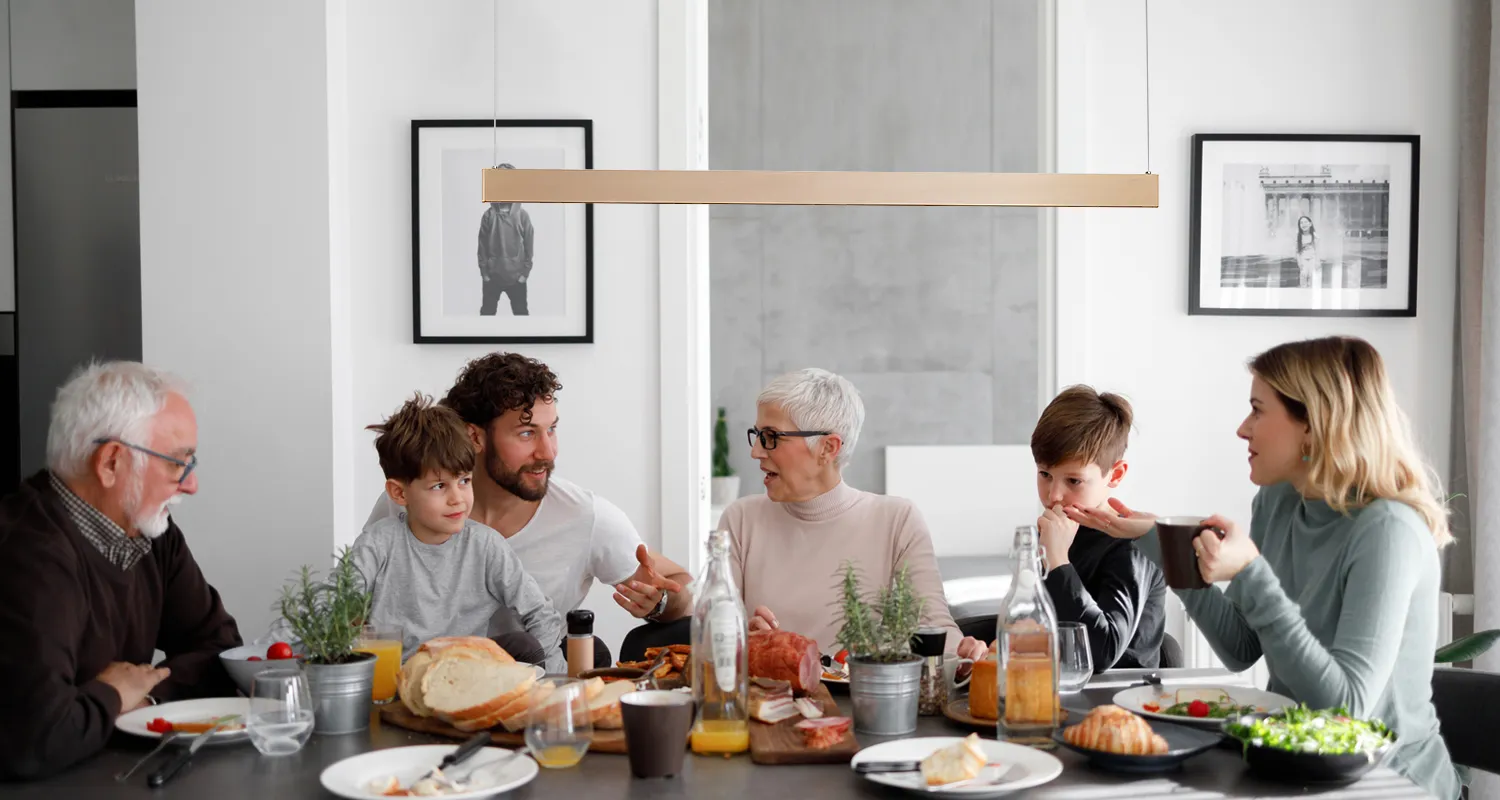
Homes. Over a dining table or a kitchen island, the linear pendant light replaces a decorative chandelier with something easier to live with and easier to clean, and the lower lumen tier is normally enough for the room.
Reception desks and boardrooms. A single bar centred over a table washes the whole surface evenly without the glare a cluster of small fittings can create at close range.
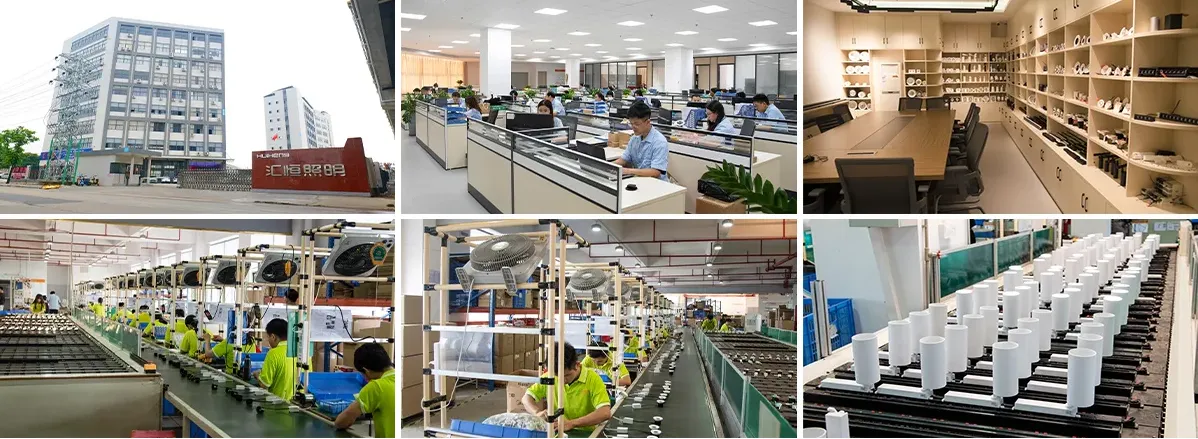
Working directly with the led linear light manufacturer takes a layer out of the chain between your project and the production line. Huiheng Lighting has spent 12 years on OEM and ODM work for lighting brands and importers, and the process sits in our own factory — die casting, hardware and packaging are produced in-house, and every stage is checked as it moves along the line rather than only at the end. That matters most at the two ends of an order: the first batch, where the finish and the light output have to match what you approved, and the repeat batch a year later, where the same specification has to come back unchanged.
Larger enquiries rarely stop at one bar. As a led linear light supplier we cover the rest of the indoor commercial range as well — recessed and surface-mounted downlights, spotlights and grille spotlights, track lights and magnetic track systems, pendant lights and stair lights — so a whole floor plan or a whole shop can be sourced against a single purchase order and one set of paperwork. If you are fitting out several branches, tell us the schedule at the enquiry stage and the deliveries can be planned around it.
Custom work is part of the service rather than a special favour. Housing colour, a logo on the product or the packaging, changes to length and power, and different colour temperature or dimming arrangements are all discussed before an order is placed, with what is practical confirmed for your quantity and schedule. Lighting design consultation, installation guidance and after-sales support come with the order, so the person who specifies the job and the person who fits it both have somewhere to take a question.
Output, layout, dimming, care and repeat orders are the questions we answer most often on this model. The answers below reflect how the fitting is normally specified, installed and looked after.
Choosing the output level
Start from the surface the bar is lighting rather than from the room as a whole. A linear pendant light hung over a dining table, a kitchen island or a service counter lands almost all of its light on that one surface, so a lower output step is usually enough; move up a step when the ceiling is high, when the bar is also expected to carry the general lighting for the space, or when the surrounding surfaces are dark and the contrast would otherwise feel uncomfortable. If your project has a target illuminance on the working plane, send that figure together with the planned drop height and we will advise which step to write into the schedule.
Planning the layout
One bar performs most evenly when it follows what it lights: down the centreline of a long table, along the length of an island or a display run, or parallel to a bank of desks. Longer rooms are often covered with two or more bars hung in line, and wide counters or conference tables are commonly served by two runs set side by side. Spacing depends on the mounting height, the output step and how even the light needs to be, so treat it as a conversation rather than a fixed rule — a ceiling plan and a drop height are all we need to work through it with you. Whatever the arrangement, keep the bars level with one another and at the same drop; uneven heights are the first thing the eye notices when the ceiling is left open.
Dimming
Dimming behaviour follows the driver and the controls already chosen for the building, not the bar on its own. Tell us what will sit on the circuit — a wall dimmer, a scene controller, a central control system — and what wiring is available at the ceiling, and we will confirm what suits your project before you commit the specification. Settling this early is worth the effort: a dimming note written into a tender before the control system has been decided is one of the most common reasons a specification has to be revised later.
Day-to-day care
Switch the circuit off before you touch the fitting, then dust the bar and the diffuser with a soft dry cloth. A slightly damp cloth is fine for fingerprints, but solvents, abrasives and spray cleaners can mark the finish or cloud the diffuser. A thin film of dust across the strip costs more light than most people expect, particularly in kitchens and food service areas, so a quick wipe every few months is usually enough. While you are up there, check that the canopy fixings are tight and that the cables still sit evenly — a bar that has drifted out of level is far easier to correct early than after it has been hanging for a year.
Repeat orders and replacements
Order and reorder under the same item number, and keep a note of the colour temperature, finish and output step you used so a second run matches the first. For multi-site and phased projects, raise the repeat requirement early and tell us when the later phases are expected, so the specification can be held rather than worked out again from scratch. If a bar is ever damaged, the model reference is what allows us to identify the correct replacement; keep it with the as-built drawings or in the maintenance file, and confirm the current specification with us before reordering, since details can change between production runs.
Quality and compliance are handled in-house at Huiheng Lighting. Our factory has held ISO 9001 and ISO 14001 management system certification, alongside BSCI, and our products carry CE, RoHS, ErP, CB, Reach, SAA and TUV approvals for the markets we serve. A CNAS-standard laboratory supports IES file testing and integrating sphere testing, so photometric and performance data can be checked before shipment. Declarations, test reports and compliance documents can be issued per project, with the applicable market scope confirmed together with your team before ordering. Tell us your destination market and required documents, and we will confirm what applies.
It depends on the ceiling height, the surface you are lighting and how bright you want the room to feel, so there is no single number. As a starting point, use the lower lumen tier where the bar hangs close to the surface below — one bar over a dining table or a kitchen island is usually enough — and step up to the higher tier or add a second bar where the light has to reach the floor across a wider area. Send us the room size, the drop height and what sits below the fitting, and we will suggest a layout.
Dimming depends on the driver and the control system used with the fitting, so it is settled at the order stage rather than on site. Tell us which dimming system your project runs and which market you are installing in, and we will confirm the driver arrangement that suits this model. Do not assume a dimmer already installed in the building will work with it without checking first.
Isolate the circuit, then wipe the aluminium body with a soft, slightly damp cloth and dry it. Avoid abrasive pads, solvents and spray cleaners, which can dull a low-sheen finish, and give the diffuser along the underside a light wipe to keep the output even. Check the suspension cables and the canopy fixings at each maintenance visit, and keep the approved configuration on file so a replacement bar matches the original.
Long lines are usually planned as individual bars set at even spacing, which gives a continuous look without a single oversized unit to handle and install. Send us the total ceiling length and the drop height you are working with, and we will confirm the arrangement that suits the space. Whichever layout you choose, the led linear lighting output stays consistent from one bar to the next.
Have the item number and the configuration you approved to hand. The finish, colour temperature, lumen tier and light distribution all have to match for a second batch to sit alongside the first, and the packing data should match too. Quote LE006 and we will pull the original specification from your file — staying with the same led linear light supplier across a programme is what keeps batch two identical to batch one.
Custom requests are handled at the enquiry stage. A change of housing colour, a logo on the product or the packaging, and adjustments to the light output are all discussed before an order is placed, and we confirm what is practical for your quantity and schedule. Because we are the led linear light manufacturer rather than a reseller, changes are agreed with the people who will actually produce them.
Before anything is hung, check the cartons for transit damage, count the bars against the packing list and compare the finish against the sample you approved. Power up one bar per batch to confirm even output and the correct colour temperature before the rest are installed, then store the remaining cartons dry and flat until they are needed.
